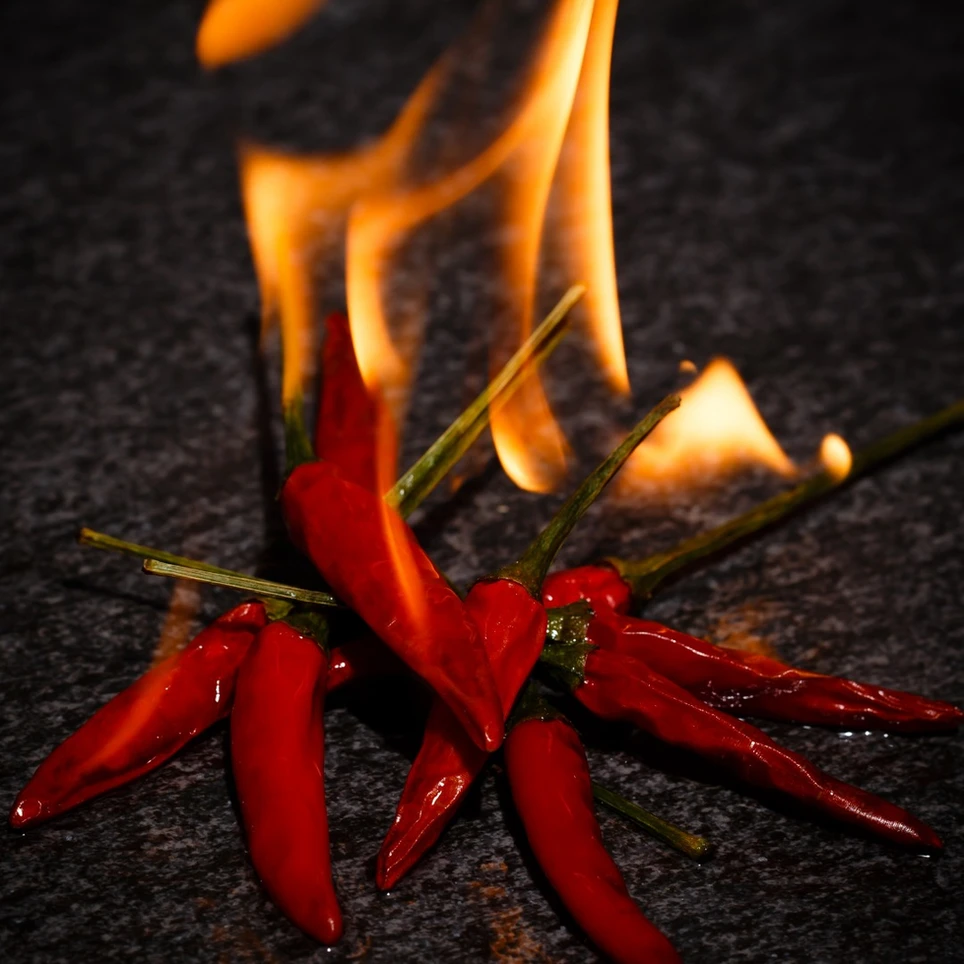
Exploring the intricacies of chili heat entails considering various factors, notably the impact of growing conditions. The stark contrast in intensity between chilies grown in winter and summer results in significant variations in Scoville ratings for the same pepper. Traditionally, chili heat is measured using the Scoville method, which assesses the capsaicin enzyme. A more modern approach involves “High Pressure Liquid Chromatography” (HPLC), appreciated for its scientific precision but criticized for lacking the sensory experience of the Scoville method. Scoville ratings gauge capsaicin levels by diluting chili juice with sugar water until no heat is perceptible. For instance, Red Habaneros boast a Scoville rating of around 500,000 units, requiring an astonishing 500,000 teaspoons of sugar water to neutralize the heat from a teaspoon of red habanero juice. Notably, mature green chilies share a comparable heat rating with their red counterparts, the latter offering a slightly sweeter heat. Recognizing a mature green chili involves inspecting it for fully developed seeds. In the nuanced realm of chili heat, understanding these complexities enhances your culinary exploration.